
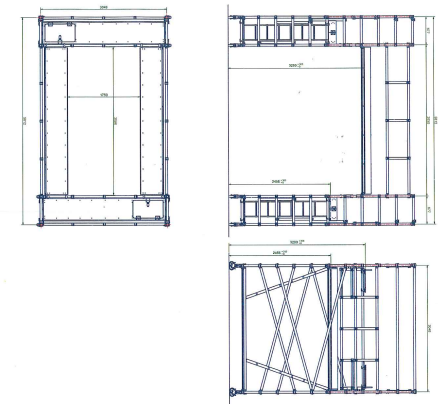
Section 1
Who should inspect?
A competent person must inspect scaffolds and components for visible defects before each work shift and after any occurrence that could affect structural integrity under applicable OSHA construction rules. The employer must also follow the specific manufacturer inspection program.
Section 2
Frames, joints and locking clips
Look for cuts, cracks, holes, deformation, damaged joints, missing clips, damaged frame connections and illegible identification markings. Remove questionable components from service for competent-person evaluation.
Section 3
Platforms and trapdoors
Inspect platform surfaces for damage and slip hazards; examine hooks, fixings, hinges, trapdoor operation, load labels and windlock mechanisms. Do not use damaged or incomplete platforms.
Section 4
Casters and adjustable legs
Check wheel wear, free movement when unlocked, positive locking action, spindle condition and attachment to the frame. The scaffold must be level and stable, with wheels locked while in stationary use.
Section 5
Braces, guardrails and toe boards
Check horizontal and diagonal braces for damage and correct locking action. Confirm guardrail and toe-board components are present as required by the approved configuration and worksite rules.
Section 6
Outriggers and clamps
Check stabilizer tubes, telescoping mechanisms, locking pins, clamps, threads and ground-contact feet. Confirm their placement against the approved model-specific design.
Section 7
Record and act on findings
Record date, site, tower identification, inspector, defects, corrective action and release-to-use decision. A checklist supports inspection but does not replace training, manufacturer instructions or competent-person judgment.
Primary references
Official sources and further reading
Use the links below to review the original source and confirm the current requirement, revision and applicability.